You can tell when you've reached Buffalo by the scenery change. When scenes of Western New York pastoral life become an awkward compilation of densely distributed wooden houses and clusters of cemeteries. Welcome to Buffalo, New York. An All American City.
"Do you need a cab ma'am?"
"No." I half way grumble at the woman without lifting my head to see her more than out of the corner of my eye. She shuffles away in her jean jacket with a grey hoodie underneath. It's cold out, but really cold. In New York City it gets cold, but it also gets windy, very windy, almost like a vindictive wind. Still, you can feel a bit of the ocean in the vengeful whips. In Buffalo it's just cold. A bitter cold that seeps through your clothes and tries to sting right through to your bone morrow. Often it succeeds. It is 5:45 am, and I am fresh off the bus from my third college semester in New York City. I have also just finished reading Greg Ames' Buffalo Lockjaw, a book I compulsively bought when I saw it oh so pretentiously sitting on a bookshelf in the NYU bookstore. What are you so proud about, no name author with your book about this coming home to this no name city? I had to do it, and now it sits heavy on my mind as I stare out at the chocolate brown wet pavement, the orange street lamps, and the accenting snow.
I wish my mother would come faster, not because I'm cold but because I worry that the cabbies think I'm lying. Maybe they don't think I'm lying. Maybe they don't give a fuck. That's fine, I don't give a fuck about them either, or their stupid blue van cab service. Need a lift? 875-3500. And this is not downstate elitism, I've always felt this way: any cab service you need to call defeats the purpose of being a cab service. In my opinion. And any cab company other than NYC Taxis is a joke.
No, I don't care about the cabbies, but I do wish that I had given that woman more time of day then I did. I didn't even lift my head up, I could have smiled. Looking at her I realize that while in New York she would seem like a shady character, in Buffalo she is just a normal woman, a hardworking woman: short stature, stringy dyed red hair, and a scrunched up face with a few good hard lines pressed into it, probably from years of working mornings like this; years of Buffalo lockjaw. Yeah, she's just normal, yet too much time in the City made me treat her like a bum, which is ironic 'cus I've been a bum (in New York, handing out flyers puts you on the same level as a pan-handeling drunk to pedestrians). I feel bad, I've forgotten where I came from.
No, that's impossible. That's something I've learned from Ames and from life: you can never take the Buffalo out of the Buffalonian. It's there forever, whether its showing your friends on Long Island how to dig a car out of the snow, or when you scoff at chicken wings at a restaurant. And Buffalonians always seem to run into each other, you'll find them happily sprinkled around everywhere. Youths mostly, trying to escape their fate and the ironing of hard lines into their face by the lockjaw.
My mother has arrived. It's taking her longer to figure out how to open the door these days it seems. Or maybe not, maybe that's a petty observation, but if you've read Ames' book, which is also about coming home to witness his dying mother's last stages of dementia, you would understand why I am concerned. I am not much of a literary buff (no pun intended), but Buffalo Lockjaw is probably not the most stellar piece of literature. Buffalonians will love it however. Not just because they are looking for the shoutouts and insiders on every other page(which unfortunately Ames often has to explain for those other readers), but also because of the sentimental understanding each chapter has of the city and its people. And rightly so, it's written by a man who knows how the cold goes straight to the morrow, how sometimes you find the majority of life's answers driving around aimlessly on the West side, and how the 27-blocks of Elmwood avenue break hearts, save lives, and become a backdrop for the climb from childhood to young adulthood. My mother has just run a red light. Not even one of those speeding right through the yellow, but she genuinely looked at it and still did not notice it was red until she was under it.
"Mom!" I cry out, but then I notice that someone has opened a new coffee shop on Broadway. Right across from the library. Good for them. The wind is whistling through my window. That Buffalo cold still trying to get at me. It's relentless I swear. One February to March I saw it play with our hearts, bring sun and signs of grass and new buds one day, then killing them all the next with a harsh frost. We are not suppose to be on Broadway. "It's too early for you isn't it?" "Yes," laughs my mother " You're really risking both our lives by having me out this early." I believe her, I blame it on the time.
Humboldt Parkway. My mother told me that when she was younger, this use to be a glorious stretch of actual park. Two sides of the road were separated by a giant island full of trees and grass and foliage that went all the way through the city. Now they're separated by a vast, noisy, and very ugly expressway. A piece of highway infrastructure that when built, during the days of city expansion and population growth, was a great idea, but now, after deindustrialization, is just a rarely-densely populated stretch of pavement and columns that makes getting anywhere never take longer than 10 minutes. Back then, the city got swept up in the national highway craze during the glory years of the 50s. Now, it's a sight of contention. Politicians debate about tearing it down, as if that will make the city better. Even if it would, this hasn't happened. It doesn't and probably never will. That's a Buffalo mindset for you.
My mother forgets the keys to the door in the car. I need to stop taking notes of these things. But I'm happy she did. It gives me a chance to look at my street. Covered in a blanket of snow, it's silent. The little sleepy homes resting peacefully. There's the standard one house with sorry excuses for christmas lights blinking, the smell of winter in the early morning air that makes your nose tickle. The pink-grey sky hugs the neighborhood, my breath the only thing I can hear. I love being home.
Inside it's like I never left. I go up to my room to turn on my heater to bump that lofty chill off. My mother has turned on the radio. 10 years ago, right at this time, I would stumble downstairs, rubbing sleep out of my eyes, and ruin my mother's bathroom time. We only have one bathroom in this house, and she was never finished getting ready before I was just getting started. The same radio station would be playing in the background, the same coffee pot roasting under the same fluorescent lights in the kitchen. Some things never change.
Though things do change. Around the time I post this, my grandmother would come hopping up our steps, I'd let her in. Eventually my Papu would be the one to get me, and he would honk his horn. Then later, it was my grandmother again, with that silly leopard printed hat on her head, her glasses, and shifting teeth that always made a smile when she saw me. She would come in and start fussing with my grandfather. Then my mother would take me to school.
Now all three of them are gone, and I watch my mother hop up the steps of our porch, in her silly fuzzy hat. If she weren't so tall, I'd think I was looking at a ghost. It would make sense: my grandma passed in what is now my mother's office. I wonder if on early mornings, or late nights, they keep each other company without even noticing. I go down the back hallway to let my dog in. He looks like a black bear. I did this all the time, every morning and night. Sometimes I'd even go out barefoot. Today, I have on slippers.
In my room the sun has not yet poked through the window. My fake fireplace pops. When there were snowdays, I would climb back up here, laugh at the cold for loosing this battle, and lay in bed, a bit too awake but very happy to be home. Then slowly, I'd drift right back to sleep.
Some things never change.
Tuesday, December 22, 2009

Tuesday, November 3, 2009
Hi, I'm Icarus, I'm falling.
We keep on burying our dead
we keep on planting their bones in the ground
but they wont grow
the sun doesn't help
the rain doesn't help
....Man I have a terrible feeling
That somethings gone awful wrong with the world
Is it something we made
Is it something we ate
Is it something we drank
-Lacrimosa, Regina Specktor
Today, or rather early this morning (4:30 am) an NYU student, a junior, jumped to his death in our library.
Foul, unnecessary, but still in the back of everyone's mind Jokes about the "BOBST diving team" aside: one of us went to a place we all know and ended his own life in a horrific, tragic, shattering way today.
When I say us I don't mean NYU students, I mean us, college students, young adults, all on a similar journey despite our various paths. Going to class, living dorm life, only eating ramen, trying to make it, struggling, and studying late night in the libraries.
Last year I had a Spanish class of 10 kids. I didn't know everyone and no one became a good friend, but the fact is that for two nights a week we all sat in a little room in a basement for an hour and a half trying to better our Spanish, for whatever reason, shrinking behind ugly American accents and hating subjunctive conjugation. As usual, every kid had a chair and/or general area of the room he or she occupied. Every kid had a distinct role: there was the kid who smelled like menthol cigarettes all the time, the eccentric senior, the girl from my home town, the cool guy, the rather goofy guy, the young cute PhD student teacher, etc. Then one day I came into class and no one was moving, and there were two strangers dressed in black at the front, and my teacher looked a way I never saw before. One of my classmates had died. He had been missing from class for about a week or so, no one really noticed, he was just sick or blowing it off, flu season had started, I'm sure I probably made the "is he still alive?" joke on one occasion. He wasn't. He had passed the weekend before. No one had seen him prior too, no one would see him again.
None of us were friends. None of us are. But we all gathered twice a week in a basement for an hour and a half and the fact remained that one of us was gone, had been ferried off into the Netherlands of the afterlife that scare the shit out of any person with a soul underneath the skeleton--That the grim reaper had come and stolen him away and sucked the control right out of our hands and left us spinning in a vacuum and that something strange and deep down inside of us knew we wanted to be sad and we were and we didn't know what to do with it.
It's a tragic thing when a young person dies. It's even more tragic when a young person takes his or her own life because they no longer find the desire to live. Because no one deserves death. And no one deserves to leave. And we don't deserve to be left.
I had a moment earlier today Uptown and in Central Park. I remembered, vividly realized, that everything is connected, all of us, everything. I saw a man-made lake look so perfect I couldn't stand it. I heard the hum of the universe. I saw nature and city become one. I saw human life buzz between them. I heard a baby squeek to my left and saw an older woman being pushed in a wheel chair to my right and as I stood in the middle tears came to my eyes. Everyone and everything is connected and we are so beautiful. I hurt for people who cannot realize this, who never have, who may have once and never will again.
I feel sad for that young man and his family. I feel sad for his friends and for the people who passed him regularly on a daily basis. I feel sad for the student body, because tasteless jokes aside we are all shocked and a little humbled but most of all confused. Because we are all connected. We are all here: on this path, on this ship, in the basement, at that library. And one of us had to go; Icarus--your wax was not suppose to melt this soon yet violently you fell from the sky, your flight was ripped from you, where is my confidence to continue flapping? Why didn't anyone catch you, will someone be there to catch me.
Icarus
We could have helped you, had we known we would have given you some extra wax. Maybe--we could have....
We are all together and one of us left so alone.
I do not know what everyone is going through right now but I know that life is beautiful. I know that death is confusing, and I know that somewhere between a guilted sense of responsibility and necessary apathy/compacted mourning the thought stumbles in the back of each NYU student's mind.
And I know we are not alone and that on every campus some where there is something that shatters common confidence. I know that somewhere between "living fast, dying young" dogmas and constructing dreams every 20 something and late teenager fears fucking up. We're all scared, we're all all flapping. Take a moment, and remember that.
Then keep walking like nothing ever happened,
but honor the fallen feathers.
we keep on planting their bones in the ground
but they wont grow
the sun doesn't help
the rain doesn't help
....Man I have a terrible feeling
That somethings gone awful wrong with the world
Is it something we made
Is it something we ate
Is it something we drank
-Lacrimosa, Regina Specktor
Today, or rather early this morning (4:30 am) an NYU student, a junior, jumped to his death in our library.
Foul, unnecessary, but still in the back of everyone's mind Jokes about the "BOBST diving team" aside: one of us went to a place we all know and ended his own life in a horrific, tragic, shattering way today.
When I say us I don't mean NYU students, I mean us, college students, young adults, all on a similar journey despite our various paths. Going to class, living dorm life, only eating ramen, trying to make it, struggling, and studying late night in the libraries.
Last year I had a Spanish class of 10 kids. I didn't know everyone and no one became a good friend, but the fact is that for two nights a week we all sat in a little room in a basement for an hour and a half trying to better our Spanish, for whatever reason, shrinking behind ugly American accents and hating subjunctive conjugation. As usual, every kid had a chair and/or general area of the room he or she occupied. Every kid had a distinct role: there was the kid who smelled like menthol cigarettes all the time, the eccentric senior, the girl from my home town, the cool guy, the rather goofy guy, the young cute PhD student teacher, etc. Then one day I came into class and no one was moving, and there were two strangers dressed in black at the front, and my teacher looked a way I never saw before. One of my classmates had died. He had been missing from class for about a week or so, no one really noticed, he was just sick or blowing it off, flu season had started, I'm sure I probably made the "is he still alive?" joke on one occasion. He wasn't. He had passed the weekend before. No one had seen him prior too, no one would see him again.
None of us were friends. None of us are. But we all gathered twice a week in a basement for an hour and a half and the fact remained that one of us was gone, had been ferried off into the Netherlands of the afterlife that scare the shit out of any person with a soul underneath the skeleton--That the grim reaper had come and stolen him away and sucked the control right out of our hands and left us spinning in a vacuum and that something strange and deep down inside of us knew we wanted to be sad and we were and we didn't know what to do with it.
It's a tragic thing when a young person dies. It's even more tragic when a young person takes his or her own life because they no longer find the desire to live. Because no one deserves death. And no one deserves to leave. And we don't deserve to be left.
I had a moment earlier today Uptown and in Central Park. I remembered, vividly realized, that everything is connected, all of us, everything. I saw a man-made lake look so perfect I couldn't stand it. I heard the hum of the universe. I saw nature and city become one. I saw human life buzz between them. I heard a baby squeek to my left and saw an older woman being pushed in a wheel chair to my right and as I stood in the middle tears came to my eyes. Everyone and everything is connected and we are so beautiful. I hurt for people who cannot realize this, who never have, who may have once and never will again.
I feel sad for that young man and his family. I feel sad for his friends and for the people who passed him regularly on a daily basis. I feel sad for the student body, because tasteless jokes aside we are all shocked and a little humbled but most of all confused. Because we are all connected. We are all here: on this path, on this ship, in the basement, at that library. And one of us had to go; Icarus--your wax was not suppose to melt this soon yet violently you fell from the sky, your flight was ripped from you, where is my confidence to continue flapping? Why didn't anyone catch you, will someone be there to catch me.
Icarus
We could have helped you, had we known we would have given you some extra wax. Maybe--we could have....
We are all together and one of us left so alone.
I do not know what everyone is going through right now but I know that life is beautiful. I know that death is confusing, and I know that somewhere between a guilted sense of responsibility and necessary apathy/compacted mourning the thought stumbles in the back of each NYU student's mind.
And I know we are not alone and that on every campus some where there is something that shatters common confidence. I know that somewhere between "living fast, dying young" dogmas and constructing dreams every 20 something and late teenager fears fucking up. We're all scared, we're all all flapping. Take a moment, and remember that.
Then keep walking like nothing ever happened,
but honor the fallen feathers.
Thursday, September 17, 2009
Thursday, August 13, 2009
WTF America (Make Shift Patriot)
So I have been away from the blogosphere for sometime and away from American news and the country itself for a hot minute. After the urging of my friend Mike, I decided to take a day and see what's going on in the motherland. And of course after a simple 4 minutes of browsing I came up with this question: WHAT THE FUCK AMERICA???
I know, not that original but still. Here is a list of the things I discovered that led me to asking this question.
1) The disgustingly ugly battle of "Health Care Reform"
2) Disney
3) The fall of the empire and its strict denial.
4) The economy
There isn't much to elaborate on for number five. Just follow the links and watch the videos and shake your heads.
Ahem, are you done puking? Alright let's get back into it.
So for starters, how about this little proposal:
David Mamet has been signed on to write Disney's (yes, DISNEY's) version of the Anne Frank (yes, Anne Frank) story. Yes yes, that is heavily confusing. Let me put it to you this way
The entire idea is an Oxymoron. My only question is, will this be animated or live acted?
Either way, my guess is that we should be ready to meet the new Anne Frank
Disney Exec: No no, it will be awesome! By night she'll be a blonde rockstar and by day an average Jew hiding from the Nazis! "It's just the best of both worlds, but only if the Fuhrer don't find out"
So this is nothing new: the economy is fucked. Listen I am in no way shape or form an economist. When I hear/read numbers my brain spazzes. But I just want everyone to know that there are no jobs to be found post-college. Though you will still be in thousands of dollars of debt. The working class continues to be exploited, though don't worry, it's full of mostly youngish typically nonwhite Women so who cares about them right? And apparently we won't start feeling any of the "better" that the economy is getting for quite some time.
I guess the part that really pisses me off is that my fellow classmates and I have played our cards right. We've competed and kept afloat in a flawed academic system, done what's expected of us, succeeded and sneered at the losers, hated ourselves for getting less than B's in subjects we despise and no longer mean anything to us, kept our mouths shut, got into the top colleges, cost our parents an arm, leg, and a soul, and continue to do well. And for what? To graduate with nothing given back to us but some demands from the bank because the schools we've pretty much been shaped to go to and aim for cost 30,000 dollars more than what some airline pilots make? To be guaranteed only a position at a minimum wage job (and not even a manager position at that)?
That brings me to the other thing I was going to talk about, the Health Care issue. Because not only does Europe have universal health care, it also has affordable education.
Exhibit A:
KateTheGreat
My British friends have nothing bad to say about their healthcare system...it's served them well! Also, they pay around 40% tax on their income (same here when all said/done) but get free healthcare and $3,200/year tuition at Oxford! You can't attend a community college here for that amount!! At least they're getting something for their money...
For those of you who don't know, the health care reform battle has gotten OUT OF FUCKING CONTROL! People are spreading all sorts of nocuous, vicious, and deceptive lies about the future of health care were President Obama's proposal to become reality and the bad part is....Americans are believing them.
"...it surprised me to hear my Catholic grandmother say that if health-care reform passes bureaucrats will show up at her door advising euthanasia—and especially to hear my mother, now undergoing chemotherapy, insist that were Obamacare already law it is more likely than not that she’d now be dead."
- Conor Friedersdorf, "Why Obamacare Scares America". The Daily Beast. 8/11/09
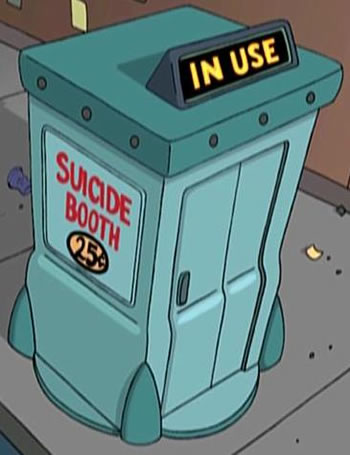
Level headed Americans are not the only ones getting upset by it either. European countries, for example Britain, are getting pissed off about the flat out lies being tossed around about their very own system, which by the way, really isn't that bad. There are no Ethical Suicide Parlors in merry old England.
But Mr. Friedersdorf does make a good point in his article. The other side isn't doing a good job at making this fight any less harder or frightening. I agree that this battle needs to be fought much more quieter, softer, and in smaller doses. Because let's face it, yes:
by the age of 40 we will all have some sort of cancer or stress related heart disease and be living in a deteriorating body that is either a walking pharmacy or pin cushion.
Considering that social security will be virtually nonexistent, I would like to not have to worry about a medical bill for my remaining 30 years. However, not every American is comfy cosy with this idea. In fact, most Americans are still in a rather pathetic state of denial over the condition of our country. I would compare it to the way that conservatives and Republicans are denying that they are getting old.
The empire has indeed crumbled, but any time you mention this to my fellow citizens and the changes that need to be made in order to insure our high standards of living and the prosperity of our country it's "Oh no! THE SKY IS FALLING THE SKY IS FALLING! We're going to turn into EUROPE!" As a minor globe trekker, I need to tell you that the rest of the world is not scary. And its big. Oh yeah, it's also very, very progressive. Wake up homies, we're not the only important ones anymore.
However, as another disgruntled commenter puts it, we would much rather prefer to cling to our misinformation, stubborn bias, and arrogant ignorance. Because it makes us feel good about ourselves, but more importantly it makes us feel less scared. We need to continue to cushion that fall into reality for as long as possible.
So go on obedient citizens, stand by your motherland and fight the opposition to hell. But for one nation under God's sake, don't expect a reward. My college brothers and sisters? My advice to you is to stop expecting that good job and pat on the back from the nation you've busted your ass and spent the last 4 years working minimum wage jobs for. Start brushing up on your foreign language skills, for somewhere across the pond there is probably a promise land for you. And I know that our education system and society cripple us completely to work in the global market, but perhaps if you take half the effort you've spent trying to get into a top tier school into learning at least two other languages, you'll be okay.
As for me, well
now that I've had my daily dosage of wtf America, I am going to go to bed
in Europe.
Where the health care is free (ish)
the beer and wine are good
the cars are fantastic
the speed limit nonexistence
and the police digital
yet the water still coming out of the faucet hot
the food still abundant
and the people more healthy.
How'd it get that way? I don't know.
Does it have it's problems? I'm sure.
But it certainly is a nice thought.
Cheers from Wiesbaden, Germany
xox sue-elise
"haha, dont forget the nazis" <----- Fuck you Mike.
Friday, June 26, 2009
An Empty Throne
I certainly did not intend to blog about this.
When I heard that Michael Jackson died, my eyes immediately filled with tears. They didn't run down and I didn't cry, but tears were there. I didn't really think much of it; that happens often when I get caught up in a moment of overwhelming excitement over something I'm not even sure I should be emotional about but is just...shocking. And this was certainly it: shocking, piercing, and really unbelievable. Earlier that day I was just looking at an month on People's Magazine with photos of Michael and his kids. I looked at Michael, with his odd features and pale skin and thought "despite it all, he's still going". The last thing I ever expected to hear about him that day was that he had died at 50.
I stood in the same spot in the same position for the following 15 minutes, not even moving my feet while I whipped out my phone and texted everyone in my contact list: "DID MICHAEL JACKSON REALLY FUCKING DIE JUST NOW!!!!!!!!??". As the texts rolled in to me and everyone else in the room, it became clear that the answer was yes. I suddenly imagined the world stopping for a moment, I imagined mourners clad in black taking to the streets in all seven continents. I imagined news reporters and presidents truthfully caught in a moment of shock and horror and dropping their public masks for a second to take it in. It's not that I think MJ was the most important person in the world, and true he hadn't been in headlines for a while....but he was/is a legend. The man was truly that magical, so I imagined nothing short of the protestors in Tehran ceasing their violence, putting on black garments, and wailing--just for the day-- for the King of Pop.
Still, the emotional aspect of it hadn't really sunk in. So as rehearsal continued and the day went on, I had lost reason why it was such a big deal when I finally got home and turned on the television at midnight. It was all over, stopping scheduled programming and taking over CNN, FOX, and MSNBC. I watched for a bit as I worked out, talked about it online with some friends, shook my head at a facebook group entitled "Rest in Hell Michael Jackson", an utterly stupid concoction of none other than some high school boys who always seem to bless the world with daily doses of douchbaggery and dumbness, then went to bed. I mean, I wasn't his biggest fan or anything anyway. Today I watched some news, listened to different reporters and call-ins, and changed the channel to avoid hearing the 911 call. Then slowly, it began to set in as I started craving MJ songs and watched the Jackson 5 on youtube. It hit me....
There isn't a single one of us who doesn't know "ABC" or "I Want You Back". Who hasn't put either on for Kareoke, or during a solo-dance party, or while hanging with friends. My first memorable encounter with these songs and Michael himself was watching the movie "The Jacksons" on TV for the first time as a young girl, around the same age as Michael was in the beginning of the film. I loved the dance steps, I loved the music, I could relate to the beatings from Joe Jackson and his drive for perfection, and most of all I related to Michael's loneliness and the companionship he found in animals, particularly his rodent friend Ben. I cried with the on-screen young Michael when Ben was killed, and perhaps it was my first heartbreak. I've had several pet mice ever since, and they've always been my best friends. Later on, the Jackson 5 Greatest Hits was one of the first albums I ever owned.
As I grew up, Michael grew up with me. I have taken innumerable rode trips with my father, which has been our best way to spend quality time since my parents split up when I was 3 and he's been living out of state and country since I was 8. Every single trip, MJ's Off the Wall has been played at least 5 times. In my dad's younger days, that album was his most reliable partner. He told me stories of how in Germany, him and his buddies brought clubs back to life by requesting that the DJ played Off the Wall. What was once a melancholy beer hall turned into a vibrant bar filled with couples taking it to the floor, the tables, and even the ceilings to the beats of Rock with You, Workin' Day and Night, and Don't stop till You get enough. So, my father passed the legacy of music, dancing, and the ability to revamp a party by playing the right Michael Jackson tune down to me, as I'm sure your parents have to you, consequentially connecting music to love and to family, making the three synonoumous and music powerful. Michael Jackson touched the lives of millions of families and generations all around the world. When attacked with allegations of pedophilia and child abuse his fans rallied all over in support of him. They loved and appreciated the love he gave them, the love that comes alive in every dancehall or backyard party or street on Halloween when Thriller reenactment zombies take over. Love he put into songs like Black or White and campaigns against injustice and inequality and for compassion.
Michael Jackson gave the world and his fans pure love for the majority of his life. So much that he barely had any left for himself. He and his brothers were the little black boys next door from Gary, Indiana, and they walked into the homes of mainstream America not in the form of some country singer sloppily covering their "jungle music" and making it "safe", but in the form of the little black boys next door from Gary, Indiana in a time when that was unheard of. And as that little boy grew up, the scars of the nation surfaced in the form of the drastic transformations of his physical appearance. Centuries of beatings and oppression found its way in knife cuts and bone tucks in his face but he still kept giving love. Scarred by childhood and the demands of the entertainment system, he was abused by society and showbiz which took advantage of him but he still kept giving love. Two times we accused him of crimes that to him were unspeakable because we just didn't understand his weirdness and two times he was acquitted, and two times his heart broke. But on that last time, frail, bankrupt, uneasy, and barely alive with a shattered heart, seeing his fans who were still there for him and grateful, he mustered up the strength, climbed on top of a car, and gave a show. To the media and viewers at home, it was a circus, a freak show. But for Michael Jackson and his fans--it was love.
Whether it was something to laugh at or cheer at, Michael Jackson spent his life giving himself to the world. It battered him and broke him to a state where he finally had to seek sanctuary. But even then, he rose one more time to give a tour, and for one more time to give the world love. His frail and used heart just couldn't give anymore. So it stopped yesterday, and Michael Jackson died.
I know no other human being in my time and in history who gave as much as that man. Without him the likes of Chris Brown, Usher, and Justin Timberlake wouldn't exist, and maybe not even Madonna or Lady Gaga or Britney or most things on the radio. He is not the King of Pop he is the King of an Era, and without him the whole world feels the suck of the vacancy of this thrown. But I think he will, in a way, live forever. Because love lives forever, and he gave a lifetime of it. So I will show my gratitude to him. I will make sure that my children dance to "ABC", and that my grandchildren know every song on Off the Wall. So yes, we owe him this news coverage and this twittering and status updates. I expect mourners in black taking to the streets, and news reporters and presidents taking off their masks. I expect for Tehran and all of the world to pause, just for a moment, to say thank you to Michael. May he rest in peace, finally.
Tuesday, June 23, 2009
Goyte, Heart's Mess
Please allow this fantastic video to work wonders with your mind while the music smoothly slides your undergarments off and makes sweet sweet love to you before you even realize you're naked.
Ahem.
Belgian/Australian Goyte's beautiful animated video is the work of fellow Ossie Brendon Cook. Enjoy.
Sunday, June 21, 2009
"She gives bits and pieces of herself, I break myself open and pour the contents on her shelf"
So. Today is father's day. It's also my 8 (or 7, or 9th? I told you I stop counting at 6) month anniversary. I know, silly silly for me to make a big deal out of it...but SOMEONE likes to count, and that someone I happen to love. So..as a gift, I completed a song I wrote for you and decided to publish it for the global world to see...and you too. Love you rhubarb, this one's for you. Happy anniversary.
Antithesis To Melodramatic Romanticism
What do you think of me
I ruin everything
you say the sweetest things
but I dont recall a single thing.
I'm the antithesis
to your romantic bliss
how do you deal with this
am I really that lovely?
oh no
I said it again
" I miss the days when we were just friends"
and you
you died inside a bit
I know even if I didnt see it
now I've got to appologize
tears swelling in your eyes
carefully organize
backspace backspace
no that's not what I mean
you're the only one for me
this is getting so routine
how do we keep up?
what do you think of me?
I ruin everything
you say the sweetest thing
but I don't recall a single thing
I'm the antithesis
to your romantic bliss
how do you deal with this
am I really just that lovely?
dear god
I'm calling again
it sounds so good
inside of my head
and you
you answer with glee
hoping this time
that I wont be mean
I hate to disappoint again
why do I offend?
I'm hoping that you understand
but you don't
you don't
cus you're not in my head
I'm wishing i was dead
let's make love instead
take the easy way out
What do you think of me?
I ruin everything
you say the sweetest things
but I don't recall a single thing
I'm the antithesis
to your romantic bliss
how do you deal with this
am I really just that lovely?
now we're
standing face to face
my head in your hands
my arms on your waste
and you
so ginger and sweet
smile with love
and kiss both my cheeks
then I whisper the perfect thing
your heart beats and your ears ring
this is so lovely
I win, I win
but as soon as the moment ends
I'm ignoring and texting friends
I dont realize you're still there
next time just grab me and say
"What are you thinking?
you're ruining everything
stop running away from me
cus I can be your anything
don't be afraid of this
just give me a kiss
because i promise
I truly think you're that lovely."
There. xoxox- me
*yes this is copyrighted. Steal it and I'll hunt you down bitches.
Saturday, June 20, 2009
The Passion of the Pit
Here's a blog about something I didn't intend to blog about and have probably talked about too much (but perhaps cannot talk about enough)--Passion Pit.
O0o, art project from Argentina:
the beanie returns:
Ah, These guys give it their all:
By now if you don't know who Passion Pit is than you must have certainly been living under an internet rock (or real world rock, depending on who you ask) for the past year, but maybe this is a take you haven't heard before.
When I knew Michael Angelakos (though he looked much more like this one), he was making every freshmen (and probably upperclassmen) girl's heart flutter as he walked around our high school campus, turning a simple beanie hat into a fashion item/sex symbol and charming us all with his offbeat comical displays at morning meetings. My most memorable experience with Mr. Angelakos would be the time spent with him during our school's production of "the Scottish Play" (actually, it would be the morning I was at my locker, felt a tap on my shoulder, turned around to see it was him congratulating me on making my first speech ever at morning meeting, smiling, then gracefully walking down the hall into the sea of students, who were for some reason moving in slow motion, as I tried to regain my breath.....you get the picture; I was a freshman). He had the role of Duncan and I was the Sergeant with the long speech in Act I Scene 2. What I think of, in retrospect, is sitting in rehearsal one day, watching the opening of the play and hearing this utterly disturbing music come on followed by this striking high-pitched falsetto. It was creepy, but extremely unique and it worked with the scene and eerie ambience of the play. When I asked Lulu, the stage manager, where we got this from I was shocked to hear that all of it was Mike.
Less than a year ago, Lulu again introduced me to some more of Mike's music, this time in the form of a little known band from Cambridge, MA known as Passion Pit. I liked it, and a few local shows, CMJ music festival, MTV Spotlight, Columbia Record's deal, big time tours with big time artists, first EP, and headlining tour later....so does everyone else. You see not much has changed with Mike: he's still making our hearts flutter, adorable, and surprising as well as moving us with his music. This time however he's not just playing to freshmen girls and high school theatres, but to an international audience, impressing hundreds of bloggers and the Rolling Stone along the way. A few days ago, a sold out Mohawk Place and myself welcomed Mike back home (his real home, NOT Cambridge, but Buffalo) and I recorded this live version of Sleepyhead. However, what really inspired me to write this blog are the numerous covers and youtube videos I found connected to the one I posted. Just as the name suggests, Passion Pit impassions everyone who listens to them; they encourage creativity, they encourage people to grab their guitars and/or to string their vocal chords with the same unbridled fervor Angelakos's magical falsetto rings through their headphones, and finally they encourage people to feel the passion, to give themselves up to the uncontrollable outbursts of emotion and energy you'll find at a Passion Pit show, and to explode--floating in a million pieces in and out of everyone in the crowd, on stage, and the synthetic beats and tingles swerving under the high pitched yelps and children's choir in songs like The Reeling, Make Light, Moth's Wings, and practically all of Manners. From a local perspective, Passion Pit fills everyone with a beaming pride to have taught, acted, or shared the same lunchroom, quad, or city with Mike Angelakos.
In all honestly, and as it is with the most emotional of things, I cannot truly capture the essence of all this in words, and have pretty much embarrassed myself (God I hope his younger brother and his family somehow skip the beginning of this) trying. So, I leave you with some videos and these words of advice: If you want to be reminded that you're living--go see Passion Pit live. And feel the Passion.
Here's a charmer:
This guy is clearly just feeling it for himself and sharing it with the world:
This kid is pretty good; A sleepyhead cover:
This is the best cover I've seen so far, kudos to Run toto:
O0o, art project from Argentina:
the beanie returns:
Ah, These guys give it their all:
Sunday, June 14, 2009
A note to Buffalo, NY
It takes a village to raise a child. This adage is older than I am, but I question if its still around. Charity Vogel’s commentary “Dream dies, taking toll on children,” in May 25th’s paper answered my question. As a resident of the East Side and student of North Buffalo private schools, I’ve seen various sides of the education conundrum. I’ve watched as economic disparity, de facto segregation, and blindness have left many children at great educational disadvantages, much more so than their affluent, suburban, and/or privileged counterparts. Further, I have also seen many other students left in the dust. They are the invisibles: poor White children who go unaided as the outreach programs and scholarships in existence mostly cater to non-white youths. All the while, funds that could be used to deter this debilitation get funneled off to places and projects that are not in such critical need. A fine example of this is the diocesan’s decision to close the progressive, and according to the diocesan too expensive, SS. Columbia-Brigid Montessori School on the East Side, but keep their large suburban facilities and the bishop’s mansion running at full speed. It leaves room for one to wonder about the price comparisons.
What strikes me the most is not this type of decision-making (it’s really not all that surprising), but more the lethargy with which we as citizens have responded to such injustices. We complain of unmotivated Buffalo youth, of urban degenerates, of a stagnant economy and the exodus from the city of young professionals, but when has this village made the effort to protect and support its children? Perhaps we are unaware of the importance of education. Children go to school not just to learn arithmetic and literacy; they go to school to learn how to be people. I would have never fell in love with learning without my 7th and 8th grade English teacher, and I wouldn’t have thrived as an individual without the atmosphere of my high school. Yet at the same time, other students who also grew up in poor neighborhoods but didn’t share my luck went to schools that only taught them to strive for the bare minimum, where they were never offered leadership roles, were told that any college or passion above the poverty line wasn’t worth their hopes, and that in the end were encouraged to be mediocre more so than ambitious. I’ve even taught these students in classes, and have been moved to tears by the stuntedness of their intellectual and personal selves--their obliviousness to the fact that yes, more can be expected of them and yes, they can certainly do more. As Vogel said, the dream is dead.
Maybe we just don’t see the connection. It is, if you haven’t figured it out yet, that schools that limit intellectual growth limit personal growth. Yes I am aware that not every student can afford a private high school experience or to have dreams of attending top tier universities with tuitions that are exceeding $50,000 a year, but that doesn’t mean that they shouldn’t be encouraged to think that way; encouraged to go above and beyond with what they have and to think of how to excel instead of just get by. And when the funds and resources are given to the already privileged, who are encouraged to go do bigger and better things at bigger and better schools in bigger and better cities, where are we to hold the decision makers responsible and pick up where they left off? Where are we to question the overall disadvantages to the city of such choices and to care about the outcomes? When you have a whole garden of ripe minds at your disposal, yet you fail to harvest it, then you cannot complain when your villiage goes starving.
The political achievements attained by politicians and the federal handouts from presidents who seem to care are worthless if citizenry don’t care either. Beucracies can only do so much execution, and school officials can only do so much fighting. When will we the citizens, the life force of any town, city, state, or country, wake up and do our part? When will we realize our civic responsibility to make demands of our leaders and community? When will this village start raising its children and hoarding its future? Until it does, don’t you dare shake your head at the lost hooded youth robbing a West side convenience store. Recant your dinner conversations of sympathy for the family of the dead little Black boy in the street, or compassion for the futureless group of teenagers on the porch stoop. Instead, hang your head in shame and sorrow that we have lost another child, or more children. Muse not on gang violence, or poverty, or bad parenting as causes, but instead on how we as a village failed to protect them. Then, think about how we can begin to fix it.
Thursday, May 7, 2009
With and in love for the class of 08/2012...
all that I know is I'm breathing. all I can do is keep breathing. all we can do is keep breathing now...
I forgot how much these words, moaned in melancholy by Ingrid Michaelson, hit me right in the throat.
Typically it's happened at times when I question life the most: pits of depression, break ups, extreme existential moments. It's kind of like I put myself in the mood for it first, but this time it caught me by surprise.
I just woke up from a nap and am now facing my last night here in NYC.
It's not necessarily my last night, there will be many more to come after this four month hiatus.
But it is my last night in New York as a college freshman, the bright eyed and bushy tailed moments of wonderment tuning down as I take a breath and settle into adult-like skin. "Ease on down the road!" my grandma use to tell me as she coached me into a bathtub of warm water.
The water pricked my skin in an uncomfortable way before I was able to finally exhale and learn to enjoy it. Similarly, I'm wondering if it'll be sophomore or junior when I stop holding my breath.
You see I don't have a fear of getting old or something like that per say,
it's just that when you go from a kid to an adult
you also have to make the move from dreaming about things to actually doing them.
It's easy when you have excuses like still being in high school or having no money or your age to shelter you from that work.
But when those things come and go, and you wake up done being the fantasized age of 18, and are slowly yet incessantly approaching upcoming years, and life is banging on your door like "Dude, when the fuck are you going to let me in? I'm not going anywhere"---
you get a little scared.
Personally, I question whether or not I'm going to fall short of my dreams, and if I really have what it takes to make them happen.
I want to change the world instead I sleep
I want to believe in more than you and me
All that I know is I'm breathing
All I can do is keep breathing...
How long am I going to stay in the sleepy sheltered world of childhood, waiting for my ambition to somehow drive itself and avoiding the examination of my inner potential?
How long will I just keep breathing; sometimes it's all we can do, but is it the only thing I can do?
These are the kind of questions waking up on a night like this forcefully put you in the mood to answer.
They give new meaning to an old song.
And they scare the shit out of you.
Tuesday, April 28, 2009
Sarah Silverman; Love her or Hate her
"I once gave a Mexican a blow-job.......I had diarrhea for 3 months."
I told this joke as a sophomore to my mostly White friends at my mostly white, upper-middle class, private high school in my de facto segregated hometown. I liked it because it had shock value, because it dared to have shock value, because it was told by a little Jewish chick who dared to have shock value, and because...well....it was funny. Insensitive, mean, and racist--yes, but also ridiculous and therefore a racism worth laughing at. It'd be three years before I came across some literature and an academic setting that would validate and better articulate this opinion that my 16 year old mind was forming and struggling to defend.
Now I don't mean to bog you down with academia but this is "my mind brought to you by the speed of my fingertips". Recently I was assigned this webessay to read for my media crit class. It's called "Awkward Conversations About Uncomfortable Laughter" and is about the precious Sarah Silverman and her offensive jokes. No, it's not a bunch of offended Mexicans demanding Silverman be tarred and feathered. Instead, it's a critical look at how and why Silverman's comedy functions, and why it should be examined with more of an open mind ready to discuss instead of a closed mind ready to finger point and protest. I wrote a little response which I'll post here, but I invite you to read this essay for it's full of lovely good points and enjoyable video clips. In a time where anyone with a microphone and a stage who says the wrong thing gets virtually stoned, it's important that we think twice before we criticize; question before we shrink back in pain and hurl counter attacks.
The essay can be found here: http://flowtv.org/?p=1201
As a fan of Sarah Silverman, I enjoyed Henry Jenkins's essay "Awkward Conversation About Uncomfortable Laughter" that recognizes and analyses the causes and effects of Silverman's jokes, which are usually very funny and highly "offensive". Jenkins notes that Silverman's humor is effective and worthy of discussion in the way that it "map[s] the border between what can and can not be said," about race and ethnicity in an America that's becoming increasingly diverse and ethnically fragmented simultaneously (Jenkins). Many of Silverman's jokes depend on an America,particularly White America, that hasn't figured out how to create new racial relationships and discourses despite the breakdown of older racial rhetoric. As a result of this national context, Silverman's stage persona is a over-exaggerated/dramatized version of a confident, innocent, well-intended yet horribly ignorant White American who falls on her face when trying to deal with issues of race by radiating blatant "enlightened racism" instead of the tolerant speech she aimed for, although she remains blind to this fumble (Jenkins).
What makes Jenkins's argument and Silverman's work so important can be summed up in this quote: "There are no words to describe whiteness which have the same sting as 'chink' or 'nigger' and so she has to perform whiteness, against a backdrop of other racial identites, so that it can recognize itself in all of its insensitivity and self-centerdness," (Jenkins). This quote brings up an important question that is central to Jenkins's argument: how do Whites, who traditionally have been seen as the racial majority and therefore void of racist discrimination, enter into a conversation that has been closed off or taboo for them? Where is this space? In the realm of joke relations, comedians set the boundaries for who could tell jokes about whom: Blacks tell jokes about Blacks (and sometimes Whites), Asians about Asians, etc., leaving Whites with no platform to make jokes about other races and for conversations about racism to be carried out only by minorities. But this is not the way to have an open and effective discourse on race policies, especially if one is preaching to the choir. Silverman is forcing Whites (and everyone else) to stare these mishandled issues in the face in a time that calls for such a task to be done if we are to operate as a cohesive society (Jenkins notes that Silverman's joke would never work had it not been for the great changes in the American ethnic and cultural landscape). For me, I equate Silverman's work to that of another favorite comedian Margaret Cho, who once explained her lewd and brash humor (most notably about sexuality and body image) as her way of getting hush-hush topics out in the open because if they're not talked about it is as if they don't exist. Slippery race relations still exist in the US, and Sarah Silverman is just creating the space, perhaps a bit forcefully, for us to discuss them.
Thursday, March 5, 2009
New York City-March 5th-1230 am
Today, late night/ early morning riding the 1, my peaceful ride and the bubbly Italian chatter next to me was cut by the announcement of a panhandler. It's nothing new here, but this time the whole train went silent as this man gargled his words. I couldn't tell if he was drunk, brain damaged, or if his vocal chords were just shot after years of abuse, alcohol, drugs, and cold weather. I assumed a mix of all three. I strained my ears to hear him howl about his situation. "I desperately need a job," I made out. "If anyone can, please, HELP ME!"
But the help me was a howl from his soul. It was a shriek that began as air from lungs pinched by cracked rib bones, escaping through a broken throat. It was more desperate than the howl of Ginsberg. It was like the help me of the lost little white girls in thriller movies. It was the help me of someone dying, drowning in a puddle of his insides. It was the epitome of desperation, and after it I listened as the man moaned his way through "Ain't too Proud to Beg" , horribly too fitting, surprised that he got as far as he did. I bet he came from a time where that was his favorite song to hear on the radio and to sing with his friends. I bet he's had that memorized since he was my age.
And what did I do? I stuffed my nose in my book of essays, I ignored him just as this city and these people have taught me too. No--
of course you cannot listen to every crying bum and empty your pockets for everyone with a cup. But do you ever wonder where he came from? What he was like when he was a child? If his family knows where is now? The amount of dehumanization and abandonment of pride and dignity it takes to do that every day? Did he ever have any? When did he realize he lost it? What were his dreams as a child, what neighborhood did he grow up in, what's his mother's name, what's his name, why is he here, on this train, drowning in phlegm and whiskey? How did he get here?
It's far much easier to turn pages than it is to think about these questions.
I got onto the 2 and the man slumped over in the seat across from me stank so bad of urine that at the next stop I ran to the next car. And on this train was another man, coughing and clutching a McDonald's bag, his finger circling a barbecue saucepacket, his mouth creating a contorted sad smile, and he laughed in whimpers between coughs.
And they're always black, dark black. A black deeper than the keys on my macbook. Black like the caked frying pan your mother use to cook with. As black as the dirt they're covered in, the filth that is their existence.
As I transfered at Times Square I walked past advertisements and pictures and sparkly images. The reflections of our consumerist culture that feasts, and feeds, and ingests.
We love our comfy lives but we have to walk on the body of someone to live them. Crumple their bones like the dollar bills fisted into pockets.
No, Freedom isn't free.
My girlfriend once told me about the time she watched Sarah Jones perform her brilliant one woman show, during which she portrayed a homeless woman who said people don't like to look at her because she's actually our reflections. I've always remembered that.
Waiting on the platform for the Q to take me home, as cars flickered pass me with bundles of blankets and coats hunched over in the corners, I couldn't help but put my head down because I felt
so
ugly.
Subscribe to:
Posts (Atom)